
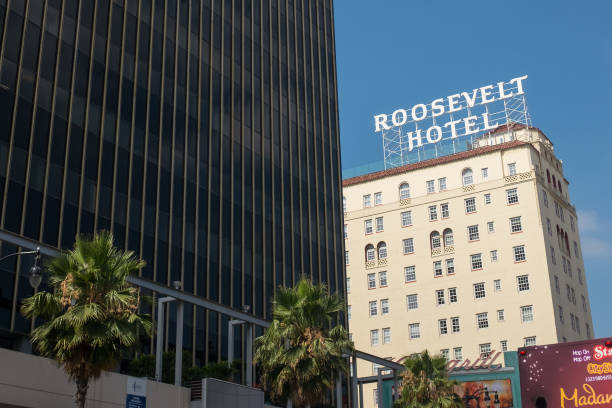
Marilyn Monroe at The Hollywood Roosevelt: the facts, the legends, and how to see them on Hollywood Boulevard
You can stand in the lobby at 7000 Hollywood Boulevard and picture a young model named Norma Jeane taking studio calls, stepping out to the pool, and learning how to be Marilyn. That image is part memory and part myth, but the building that shaped it is very real. The Hollywood Roosevelt opened in 1927 and hosted the first Academy Awards two years later in the Blossom Ballroom, a dinner for 270 guests where members’ companions paid $5 to attend on May 16, 1929. If you are chasing the pieces of Marilyn Monroe that still echo on this block of Los Angeles, start here and work outward across the street to the Chinese Theatre forecourt and down the boulevard to her Walk of Fame star.
What actually ties Monroe to the Roosevelt, and what is just a story?
Two things are solid. First, the hotel runs a Marilyn Suite by the Tropicana Pool and states that Monroe lived at the Roosevelt for roughly two years early in her career. That pool is crowned by a hand-painted David Hockney mural from the late 1980s, which is why you still see fashion and film crews staging shots around its turquoise swirls. Second, the ballroom here really did launch the Oscars, with that May 16, 1929 dinner in the Blossom Room. Those are building-level facts, not folklore.
On the folklore side, you will hear about a Monroe mirror that supposedly revealed her reflection. The hotel leans more to heritage than hauntings, and staff in past years have downplayed the idea that a ghostly mirror remains on display. Treat that one as a Hollywood campfire tale. If you want objects you can still reliably stand in front of, head outside the hotel gates and into the neighborhood: Monroe’s handprints are set with Jane Russell at the Chinese Theatre forecourt from June 26, 1953, and her Walk of Fame star sits at 6774 Hollywood Blvd.
The Roosevelt remains a working hotel, not a museum. That matters for access. The Tropicana Pool keeps posted pool hours of 8 AM to 8 PM daily and the open-air Tropicana Café runs on the same clock, which means you can fold breakfast or a late afternoon coffee into a look at the courtyard where Monroe once lived. The lobby’s bar hours run roughly midday to late night depending on the day, and the upstairs cocktail lounge and two-lane bowling parlor, The Spare Room, operates 8 PM to 2 AM most nights and is 21+ with ID at the door.
Can you feel Monroe’s presence here without booking a room?
Yes, and you do not need to be a hotel guest to do it. The hotel’s own dining page lists the Tropicana as “open to hotel guests, locals, and walk-ins,” with a useful weekday perk: complimentary valet 11 AM to 2 PM for daytime dining at the pool café. That is the simplest legal way to get inside the courtyard and sit at the waterline where the Roosevelt’s Monroe stories live. If you are staying overnight and bringing a car, published valet parking is $75 per night including tax. The hotel also notes restaurant validation at $20 for the first three hours and $25 event parking, which covers most quick visits to the lobby, bar, or shows in the small cabaret theater.
Swimming is possible without a room key on many days through third‑party day access the hotel acknowledges. The pool’s FAQ says non‑guests may book seats and day access via a pass system when available, and that loungers for hotel guests are first‑come, first‑served. Because those seat prices are dynamic, the more stable rule of thumb is the clock: you are looking at a daytime swim window ending at 8 PM, and a café kitchen that closes the same hour.
If your goal is to take Monroe out of the hotel and onto the boulevard, cross to the Chinese Theatre forecourt for the imprint block she shares with Jane Russell from that 1953 “Gentlemen Prefer Blondes” promotion. The theatre runs a 30‑minute guided tour on most days, though it cancels when premieres, private rentals, or screenings take over, so you will often get a better view on a regular weekday morning than on a red‑carpet afternoon.
Where else near the Roosevelt can you actually see her legacy today?
Two short walks give you dates, addresses, and ticketed exhibits rather than hearsay. First is the Hollywood Museum in the historic Max Factor Building at 1660 N Highland Ave, about three blocks east of the hotel. It is open Wednesday through Sunday, 10 AM to 5 PM, with adult admission $15, students and seniors $12, and a $5 child ticket listed for ages five and under. The museum rotates displays tied to Golden Age stars and costumes; while showings change, Monroe materials appear frequently, and the building itself is tied to the studio‑era beauty work that helped create her image.
Second is the small, preservation‑minded Hollywood Heritage Museum in the Lasky–DeMille Barn at 2100 N Highland Ave near the Hollywood Bowl. It is open a tighter schedule, Saturday–Sunday 11 AM to 3 PM and the first Thursday 11 AM to 3 PM, with adult admission $15 and children 12 and under free. Parking is free until 3 PM in Hollywood Bowl Lot D when the museum is open, which spares you the boulevard garages if you are pairing a Roosevelt stop with a studio‑era history lesson in one hop.
Do not skip the sidewalk. Monroe’s Walk of Fame star is officially recorded at 6774 Hollywood Blvd, roughly a five‑minute walk from the Roosevelt’s front doors. For practical parking when you pivot to the Chinese Theatre or Dolby Theatre complex, the city‑owned garage at Ovation Hollywood (the Hollywood & Highland center) posts a daily max of $20, and offers up to four hours for $3 with validation from the TCL Chinese Theatre or the TCL Chinese 6. Those validations typically beat street meters and off‑brand lots on days without major events.
How to build a half‑day around the Roosevelt without wasting time in traffic?
Late morning is your friend. If you’re driving, arrive just before 11 AM and use the Roosevelt’s daytime dining policy to get complimentary valet 11 AM–2 PM when you sit down at Tropicana Café. That buys lunch and an unhurried look at the pool mural. From there, walk to the Chinese Theatre forecourt for Monroe and Russell’s June 26, 1953 imprint. If a 30‑minute tour is running, it typically fits neatly between lunch and a museum visit next door. If the theatre is blocked for a premiere, switch the order and head for the Hollywood Museum instead; the museum’s 10 AM–5 PM hours Wednesday through Sunday are wide enough that you can absorb the switch without losing a stop.
Prefer a museum‑first plan with free parking? Start north of the Roosevelt at the Hollywood Heritage Museum when it opens at 11 AM. Admission is $15, and Lot D at the Hollywood Bowl is free to museum visitors until 3 PM. From there, it is a downhill stroll to the boulevard. Hit the Roosevelt lobby, then the Chinese Theatre forecourt for the Monroe–Russell block, and finish at the Walk of Fame star at 6774 Hollywood Blvd. If you want a nightcap before you leave the neighborhood, the Roosevelt’s Spare Room opens at 8 PM and runs to 2 AM on its operating nights, but remember it is 21+ and entry requires physical ID.
| Option | What it is | Price or access | Hours / notes |
| Roosevelt Tropicana Café | Open‑air dining by the Hockney‑painted pool where Monroe lived nearby | Restaurant pricing; comp valet 11 AM–2 PM for daytime dining | 8 AM–8 PM daily; walk‑ins welcome |
| Roosevelt Pool Day Access | Non‑guest swimming via day passes or reserved seating | Sold through a pass system when available; prices vary by date | Pool 8 AM–8 PM daily; availability can change for events |
| The Spare Room | Two‑lane bowling lounge and cocktail bar upstairs | Bar/lounge pricing | 8 PM–2 AM most nights; 21+ with physical ID |
| TCL Chinese Theatre Tour | Guided look inside the 1927 movie palace and its forecourt traditions | Ticketed; 30 minutes | Offered most days; not available during premieres or special events |
| The Hollywood Museum | Golden Age exhibits in the Max Factor Building | $15 adult, $12 student/senior, $5 child 5 and under | Wed–Sun, 10 AM–5 PM; rotating displays include Monroe‑era artifacts |
| Ovation Hollywood Parking | City garage by TCL Chinese and Dolby Theatre | $20 daily max; up to 4 hrs for $3 with TCL validation | Entrances on Highland and Orange; validations vary by tenant |
| Roosevelt Overnight Valet | On‑site hotel parking | $75 per night including tax | In/out privileges; restaurant $20 validation for first 3 hours |
Why Monroe’s story lingers on this block
This stretch of Hollywood Boulevard still carries the bones of the studio system that invented and packaged star personas. The Roosevelt is part of that machine’s physical plant, with the Oscars starting in its Blossom Room and the Chinese Theatre across the street cementing a public ritual around handprints and premieres. The fact that Monroe spent part of her anonymous years in a poolside unit here matters because her later enshrinement is literally poured into concrete within sight of the hotel door. You can parse the gap between person and product by looking at three specific places that still function: a working hotel courtyard, a working movie palace, and a museum space built around the stylists and lighting that sold a face to millions.
Seen this way, the free choices are as revealing as the paid ones. Monroe’s June 26, 1953 imprint with Jane Russell sits a few paces from tourists buying tickets and popcorn, and her 6774 Hollywood Blvd star draws more phones than most monuments in Los Angeles. You do not need to spend much to understand why her image keeps surfacing in ads on the Roosevelt pool deck or in weekend programming under the hotel’s small cabaret lights. What she left behind in Hollywood is not one room or one photograph. It is a geography, and the Roosevelt is the front lobby.
Reader Q&A
Did Marilyn Monroe really live at the Hollywood Roosevelt?
Yes. The hotel’s own room catalog includes a Marilyn Suite at the Tropicana Pool and states that Monroe lived at the Roosevelt early in her career. The suite faces the pool where she spent much of that time, and the property dates to 1927, putting her stay firmly in the studio‑system years.
Can I tour the Blossom Ballroom or the Marilyn Suite?
The hotel does not run a fixed public tour of guest rooms or the ballroom. The Marilyn Suite is a bookable room, not a museum, and the Blossom Ballroom is an active event space. If a private event or filming is not underway, you can usually see the historic lobby, and dining at the pool café is open to walk‑ins during posted hours.
Where are Monroe’s handprints and her Walk of Fame star?
Her handprints and footprints, set with Jane Russell, are in the TCL Chinese Theatre’s Forecourt of the Stars from June 26, 1953. Her Walk of Fame star is officially listed at 6774 Hollywood Blvd, a short walk from the Roosevelt’s front doors.
What’s the simplest way to park if I’m doing the Roosevelt, the Chinese Theatre, and a museum the same day?
If you’re dining at the Roosevelt by day, the pool café offers complimentary valet 11 AM–2 PM. For the Chinese Theatre and Dolby complex, the Ovation Hollywood garage posts a $20 daily max and typically offers up to four hours for $3 with TCL validation. If your plan includes the Hollywood Heritage Museum, its Lot D parking is free until 3 PM while the museum is open.
Key things to know before you go
- The Roosevelt’s pool and café operate 8 AM–8 PM daily and accept walk‑ins, with complimentary valet 11 AM–2 PM for daytime dining.
- Overnight hotel valet is published at $75 per night; restaurant $20 validation covers the first three hours, and $25 event parking runs on show nights.
- Monroe’s handprints with Jane Russell date to June 26, 1953 in the Chinese Theatre forecourt; the theatre’s 30‑minute tours pause for premieres.
- The Hollywood Museum is open Wed–Sun, 10 AM–5 PM with $15 adult admission; the Hollywood Heritage Museum runs Sat–Sun 11 AM–3 PM and first Thursdays, $15 adult, and offers free parking until 3 PM when open.
- Her Walk of Fame star is officially at 6774 Hollywood Blvd; pair that with a lobby visit and Tropicana coffee to keep your walking loop compact.
- If you only have an hour, the best sequence is Roosevelt café, Chinese Theatre forecourt, and the Walk of Fame star. Add the Hollywood Museum when you can spare two to three more hours.
To narrow your plan, decide whether you want a quiet history lap or a working‑Hollywood afternoon. If you want documents and displays, build around the two museums and use the boulevard only as connective tissue. If you want places Marilyn actually moved through, center the Roosevelt courtyard and Chinese Theatre forecourt, then use the validation and posted hours above to keep your loop simple and on foot.
Published: September 10, 2026 · Reviewed by the Holywood editorial team