
The Bet That Built an Icon: Sid Grauman, a Risky Idea, and Hollywood’s Chinese Theatre
Stand in the Forecourt of the Stars and look up at the pagoda roof. In 1926 this block of Hollywood Boulevard was still a workaday commercial street, not a guaranteed tourist draw, and Sid Grauman was about to pour money and reputation into a fantasy palace that looked nothing like the sober movie houses downtown. He went ahead anyway. On May 18, 1927, he opened the Chinese Theatre with Cecil B. DeMille’s The King of Kings and an onstage prologue that sold out the town. The address you are standing at today is 6925 Hollywood Blvd, inside the boundaries of the Hollywood Walk of Fame and steps from the Metro’s Hollywood/Highland station.
Los Angeles eventually agreed that this gamble mattered. The city designated the building Historic‑Cultural Monument No. 55 in 1968. That number turns up in planning documents and preservation files, and it is your reminder that this is not just a screen. It is a protected piece of the boulevard’s fabric, from the bronze dragons on the doors to the Heaven Dogs standing guard out front.
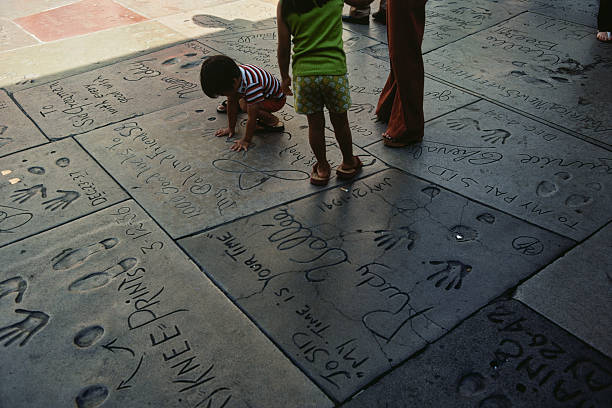
Grauman did not do it alone. Real estate developer Charles E. Toberman, already involved with the Egyptian Theatre and the Hollywood Bowl, helped secure the site and push the project on Hollywood Boulevard rather than downtown. The pavilion, designed by Meyer & Holler, arrived exactly as the 1920s appetite for themed architecture hit its peak. The premiere had a line down the block, and the theatre’s forecourt quickly took on a life of its own after the oft‑told incident of a visiting star stepping in wet cement and turning an accident into a ritual.
The building has not stood still. In 2013 the main house was reconfigured for a premium presentation that kept the ornament but upgraded the projection. The current auditorium seats 932 people, which makes it one of the country’s largest single‑screen movie rooms where you can still buy a ticket and see first‑run films. The marquee changes weekly like any working cinema, but the bones are Grauman’s.
What does a visit cost today, and which option fits your time?
You can experience the theatre three ways, and only one of them requires planning. The Forecourt of the Stars is free to walk at street level and faces Hollywood Boulevard. The concrete squares with signatures and handprints are accessible to anyone on foot when the courtyard is not roped off for a premiere or private event. No ticket needed, and most people spend 15–30 minutes tracing a path from 1920s stars to contemporary cast members.
If you want the interior without sitting through a feature, the theatre runs a 30‑minute guided tour. The theatre’s own page lists tours seven days a week except during special events. Because the schedule changes with film bookings and red carpets, you check the day’s availability and book directly with their box office. If you prefer to call, the theatre’s main number in Los Angeles is (323) 461‑3331.
The third route is the historic one: see a movie here. The main auditorium is equipped with premium large‑format projection and sound, and seats are reserved. That matters when you show up for event screenings. If you are driving, this is also the option most people choose for convenient parking, because a film ticket triggers garage validation.
The garage you want is inside the complex across the street now branded Ovation Hollywood. With validation from the Chinese Theatre or the Chinese 6, the posted deal is $3 for up to 4 hours. Without validation the garage’s posted base rate is $2 per 20 minutes with a $20 daily maximum. That pricing is specific to the Ovation facility; nearby independent lots and curbside meters follow different rules that change block to block.
| Option | What you get | Typical time | Concrete cost or policy | Good to know |
| Forecourt of the Stars | Street‑level access to the hand and footprints courtyard | 15–30 minutes | Free to enter from the sidewalk | Occasionally closed for premieres and setup. Crowds thin in early morning. |
| Guided Tour | 30‑minute interior history tour with a host | 30–45 minutes including check‑in | Runs daily except during events. Book directly with the theatre. | Schedule flexes around film bookings and red carpets. Call (323) 461‑3331 for current times. |
| See a Film | Reserved seating in the 932‑seat main auditorium | 2–3 hours depending on feature | Ovation garage validation is $3 up to 4 hours with a movie purchase | Event screenings sell out. Without validation, the same garage is $2 per 20 minutes, max $20. |
One more practical note for drivers: the Ovation garage sometimes runs flat event rates during large Hollywood Bowl nights. If you are pairing a matinee with a bowl shuttle, check the plaza’s parking page the morning you go. Otherwise, the validation at the theatre is the simplest way to keep your Hollywood Boulevard stop predictable on price.
How does the Chinese compare with the Egyptian, Dolby, and El Capitan around the corner?
Sid Grauman’s other Hollywood landmark, the Egyptian Theatre at 6712 Hollywood Blvd, opened in 1922 and returned from a major restoration with a split‑use model. Netflix operates it for some programming days, while the American Cinematheque runs repertory shows and festivals. If you like film on film, the Cinematheque’s schedule routinely includes special‑format screenings. A small, very local policy detail matters at the box office: the Cinematheque notes that you can avoid online booking fees by buying tickets in person on the day of a scheduled program. The box office only opens when there is an actual show that day.
Two blocks west, the Dolby Theatre is where the Academy Awards have been staged in recent years and where tours run most days it is not in show mode. The posted tour prices are $25 for adults, $19 for seniors and youth, and a $80 family four‑pack for two adults and two youth. Tours last about 30 minutes and the calendar only publishes a few weeks out because the venue hosts concerts and TV tapings. If you are parking at Ovation for a Dolby tour and you buy anything at a participating tenant before or after, you can still use the garage validation that gets you $3 for 2 hours from those shops and restaurants.
Directly across the boulevard from the Chinese is the El Capitan Theatre, Disney’s show palace. It runs first‑run Disney releases with live pre‑shows and often validates for the Ovation garage as a partial offset to your parking cost. The El Capitan notes this validation policy on its information page so you can plan whether to buy food or merch on site, or just use your movie ticket, to soften the garage bill. The validation prints right on your parking ticket when you get it stamped.
Inside the 1927 Hollywood Roosevelt Hotel a few minutes’ walk east, the reborn Cinegrill Theater is not a movie house but an intimate supper‑club room with a posted capacity of 150 seated. Hours vary by lineup, and the calendar swings from cabaret to classic‑film nights. It is a reminder that “Hollywood theatre” has always meant more than one format, even on this short stretch of boulevard where nearly everything else points to a screen.
Was building a Chinese‑style movie palace in 1926 Hollywood a smart bet?
In financial terms, Grauman’s choice looked risky. The fashionable movie palaces of Los Angeles clustered near Broadway and 7th downtown. Hollywood Boulevard had shops and a few showplaces, but it was not the center of gravity. Grauman and Toberman thought the boulevard could be the point of the compass. They were right. The Chinese Theatre’s opening week pulled crowds that proved audiences would travel for spectacle.
In reputational terms, the bet created a signature. The pageantry that seems inseparable from Hollywood premieres today had a co‑author in Grauman. The Egyptian introduced the red‑carpet formula earlier in the decade, then the Chinese refined it. The hand and footprint forecourt did the rest. When you walk the courtyard squares, you move from the 1927 blocks of Mary Pickford and Douglas Fairbanks to present‑day ensembles, and you can physically see how a simple slab of cement became a branding device for the whole neighborhood.
In preservation terms, the bet survived because the operators have kept adapting it. The building’s official monument number, HCM #55, means you cannot destroy its character lightly. Upgrades require a preservation plan. When the main auditorium was refitted for premium large‑format presentation, that happened with conservation professionals at the table. The result is why a person visiting Los Angeles today can compare a 1927 showman’s lobby with a 2020s sound system in one ticketed experience.
In neighborhood terms, the bet boxed in a new center. The 2001 opening of the retail and theatre complex now called Ovation Hollywood locked the Chinese on one face of a block that also holds the Dolby Theatre and offers the most predictable parking structure on Hollywood Boulevard. The local, unsexy part of heritage is how you actually move people to and from a site. The Ovation garage rates matter because thousands of people each week decide where to attend a screening based on whether they can get in and out for $3 with validation instead of circling for a curb that flips to tow‑away signs at 4 pm.
Planning logistics around Hollywood Blvd without surprises
Start with the piece you want to see. If you only have half an hour, the Forecourt is your entire show and it costs nothing. If you have an hour, build for the 30‑minute tour and use the time on either side to look up the earliest handprint slabs, which sit toward the center. For a film night, buy ahead and pick seats to match your preference for distance to a very large screen.
Driving is common here because of the direct freeway access, so it is worth restating the parking math. Moviegoers who validate at the Chinese box office or concession get up to 4 hours in the Ovation garage for $3. Visitors who only shop or eat in the mall’s participating tenants get 2 hours for $3. If you skip validation entirely, the posted rate in that same garage is $2 per 20 minutes with a posted $20 maximum. Take a photo of your stall number and the nearest elevator bank, because there are multiple pedestrian exits onto Highland Avenue and Orange Drive.
If museums are part of your day, the most direct early‑Hollywood stop from the Chinese is the Hollywood Heritage Museum inside the Lasky‑DeMille Barn at 2100 N. Highland Ave, across from the Hollywood Bowl. The museum’s posted hours are 11 am to 3 pm on Saturdays and Sundays, plus the first Thursday monthly 11 am to 3 pm. The current regular admission is $15 for adults, with children 12 and under free. The organization states that visitor parking in Bowl Lot D is free until 3 pm for museum guests, which makes this an easy add‑on before an afternoon tour back at the Chinese.
For first‑time visitors trying to see “everything in one go,” resist the urge. If you pack the Egyptian, the Chinese, and a Dolby tour into a single five‑hour window, you will mostly remember the escalators. Give the Chinese its own hour even if you only do the courtyard and a stop in the lobby gift shop. If you have one more hour in the same day, decide between a Dolby tour at $25 per adult or the Egyptian’s repertory calendar that night. Both sit within a two‑block-radius, so you can park once and move on foot.
Key things to know before you go
- The Chinese Theatre’s address is 6925 Hollywood Blvd, and it has been a protected landmark as HCM #55 since 1968.
- The main auditorium seats 932 and uses reserved seating. Buy ahead for event screenings.
- The Forecourt is free at street level when not closed for premieres. Expect occasional closures on short notice.
- The theatre’s 30‑minute tour runs most days except during events. Check the day’s schedule or call (323) 461‑3331.
- Ovation Hollywood garage validation at the Chinese gets you $3 for up to 4 hours. Without validation, posted rates are $2 per 20 minutes, max $20.
- Nearby options with real specifics: Dolby Theatre tours are $25 adults or a $80 family four‑pack. The Hollywood Heritage Museum posts 11 am–3 pm hours on weekends and $15 adult admission with free parking until 3 pm in Bowl Lot D.
- The El Capitan offers partial parking validation for the Ovation garage during its shows, which helps if you plan a two‑venue day on foot.
Reader Q&A
Is the Forecourt of the Stars actually free to visit?
Yes. The forecourt is open to the sidewalk at 6925 Hollywood Blvd and you can walk it without a ticket when it is not closed for a premiere or private event. If you see barricades up, it is usually for a red‑carpet setup and the courtyard reopens after the event.
How do I see the inside without committing to a full movie?
Book the theatre’s 30‑minute guided tour, which runs most days unless the building is in use for an event. The schedule floats with bookings, so check the listings or call (323) 461‑3331 on the day you plan to go.
Where should I park if I am seeing a film at the Chinese?
Use the Ovation Hollywood garage. With theatre validation the posted deal is $3 for up to 4 hours, which comfortably covers a feature. Without validation, the same garage posts $2 per 20 minutes with a $20 maximum. If you are only shopping or grabbing a bite in the complex, participating tenants validate 2 hours for $3.
Is the Chinese Theatre officially landmarked, or just famous?
It is both. The city of Los Angeles designated the building Historic‑Cultural Monument No. 55 in 1968, which means any major changes must account for the structure’s historic character. You can see that stewardship in how the auditorium upgrade preserved the 1927 lobby and façade.
When you are choosing where to spend your hour on Hollywood Boulevard, match the plan to the calendar and your appetite for ceremony. If the courtyard is clear and your time is tight, stay outside and let the slabs tell the story. If you want the full showman’s effect, a ticketed evening in a 932‑seat room followed by a late walk among the handprints makes the most of Sid Grauman’s original bet.
Published: September 10, 2026 · Reviewed by the Holywood editorial team